
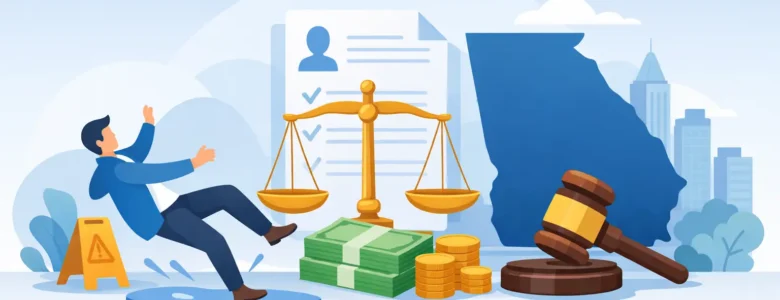
A wet floor, broken stair, loose rug, or uneven parking lot can leave someone with far more than a bruised ego. Serious falls often cause fractures, head injuries, back damage, and lost income. Yet slip and fall settlement factors are rarely as simple as proving that you fell on someone else’s property. In Georgia, the central question is often whether the owner or occupier knew, or reasonably should have known, about the dangerous condition before the injury occurred.
The value of a claim depends on the facts, the evidence, the extent of the injury, and the legal arguments available to both sides. Insurance companies look for weaknesses from the start. An experienced premises liability attorney builds the proof needed to protect your position before critical evidence disappears.
Georgia premises liability cases commonly turn on knowledge. A business or property owner is not automatically responsible just because a customer or visitor falls. The injured person generally must show that the owner had actual or constructive knowledge of the dangerous condition and failed to correct it or provide an adequate warning.
Actual knowledge means someone associated with the property knew about the hazard. For example, an employee may have seen a spill, received a complaint about a broken handrail, or created the unsafe condition while working.
Constructive knowledge can be established when the condition existed long enough that a reasonable inspection should have found it. A grocery store may contend that a spill happened moments before a fall. Surveillance footage, inspection logs, cleaning records, witness statements, and the appearance of the substance can help establish whether that claim holds up.
A recurring issue is whether employees followed the business’s inspection policies. A written policy means little if staff did not conduct or document the required inspections. When records are missing, inconsistent, or completed after the fact, that can materially affect settlement negotiations.
Defense lawyers and insurers often argue that the injured person should have seen and avoided the danger. Under Georgia law, the injured person’s knowledge of the hazard can be a major issue. A clearly marked warning sign, an obvious change in flooring, or prior awareness of a defect may strengthen the defense.
That argument is not always decisive. People entering stores, apartment buildings, restaurants, and office properties have a right to expect reasonably safe conditions. Lighting, crowding, product displays, distractions created by the business, poor signage, or the location of the hazard can all matter. A yellow sign placed nowhere near a spill does not necessarily provide a meaningful warning.
The details matter. Was the danger visible from the direction the person approached? Was the person carrying merchandise? Was an entrance mat curled at the edge? Did rainwater collect repeatedly in the same area without proper mats or cleaning procedures? The answer can change the strength and value of a claim.
Settlement value is closely tied to damages. A minor injury that resolves quickly will generally be valued differently from a fall that requires surgery, physical therapy, extended treatment, or permanent work restrictions. Still, the diagnosis alone is not the entire story. Medical records must connect the injury to the fall and show why the care was medically necessary.
Prompt treatment helps document what happened and creates a clear record of symptoms. Gaps in care give an insurer an opening to argue that the injury was not serious, was unrelated to the fall, or improved sooner than claimed. That does not mean every injured person must follow the same treatment path. Financial constraints, delayed diagnoses, and conservative treatment recommendations can be legitimate circumstances. They simply must be addressed clearly.
Recoverable damages may include medical bills, future treatment needs, lost wages, reduced earning ability, pain and suffering, and other losses supported by the evidence. A claim involving a permanent impairment may require medical opinions, employment records, and testimony showing how the injury has changed the person’s daily life.
Georgia follows a modified comparative negligence rule. If an injured person is partly responsible for a fall, the available recovery may be reduced by that percentage of fault. If the person is found 50% or more responsible, recovery may be barred.
Insurers use this rule aggressively. They may point to footwear, distraction from a phone, a missed warning, an alternate route, or a prior visit to the property. Some of these arguments are credible in the right case. Others are attempts to shift blame away from a business that failed to maintain safe premises.
A fair evaluation requires more than a quick assumption that a fall was “avoidable.” The question is whether the property owner acted reasonably and whether the visitor used ordinary care under the circumstances. Photos, video, witness testimony, and a careful reconstruction of the scene can make the difference.
The strongest claims are supported by evidence gathered early. Dangerous conditions can be repaired within hours. Video footage may be recorded over within days or weeks. Employees may forget what happened, and weather conditions can change quickly.
Useful evidence often includes photographs of the scene and footwear, surveillance video, incident reports, witness contact information, maintenance and inspection records, weather reports, prior complaints, and medical documentation. In a case involving a defective stairway or walkway, measurements, code issues, and photographs taken from the injured person’s line of sight may be especially valuable.
An incident report is useful, but it is not a final decision about fault. Likewise, refusing to complete an incident report does not end a claim. What matters is preserving the facts and identifying the evidence that supports or challenges the property owner’s explanation.
A settlement is also affected by available insurance coverage and the financial resources of the responsible party. A strong claim against a small property owner with limited coverage presents different practical issues than a claim against a national retailer or a commercial property manager with substantial insurance.
Coverage limits do not determine legal fault, but they can affect negotiation strategy. In some cases, more than one party may bear responsibility. A tenant, landlord, property management company, maintenance contractor, or cleaning company may each have played a role. Identifying every responsible party is essential before accepting a settlement that may not account for the full loss.
Insurance adjusters assess how a case may look to a jury. They review whether the injured person’s account is consistent with the evidence, whether medical records match the claimed symptoms, and whether witnesses support the version of events. They also assess whether the attorney handling the matter is prepared to take the case to court if the offer is inadequate.
Credibility cuts both ways. A store employee who claims there was no spill may be contradicted by video, cleaning logs, or another witness. A manager who says inspections occurred every hour may have no documentation to support that statement. Thorough case preparation exposes those gaps.
Settlement negotiations are not simply about submitting bills and waiting for an offer. They require a clear presentation of liability, damages, evidence, and risk. When a property owner or insurer refuses to make a reasonable offer, trial readiness can become a meaningful source of leverage.
Waiting can damage an otherwise valid case. Video can vanish, witnesses can become unavailable, and a hazardous condition can be repaired before it is documented. Georgia also has deadlines for filing personal injury lawsuits, and the applicable deadline may vary based on the parties and circumstances involved.
Do not assume that talking with an insurance company protects your rights. Adjusters may request a recorded statement or seek a quick settlement before the full extent of an injury is known. Once a release is signed, additional compensation is usually unavailable even if treatment becomes more extensive.
After a fall, seek medical attention, report the incident, preserve photographs and documents, and avoid making assumptions about fault. Then get legal advice before accepting an offer. Cuadra & Patel, LLC provides direct, aggressive representation for injured Georgians who need a serious evaluation of their claim and a legal team prepared to fight for a fair result.
A fall can change your health, your ability to work, and your financial security in an instant. The most effective next step is to preserve the evidence while it still exists and get a clear assessment of what your case may truly require.
contact us 24/7
(404) 373-6336
contact us via email