
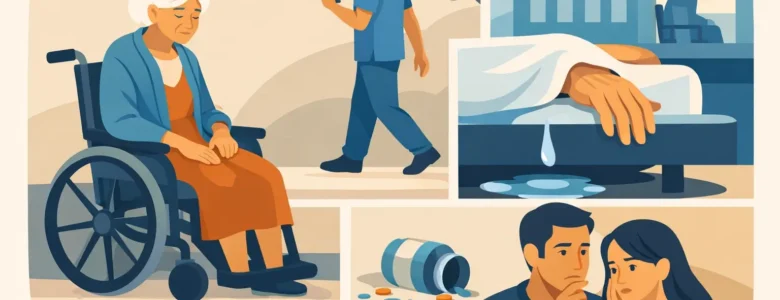
A sudden decline after a parent or grandparent enters a nursing home should never be dismissed as part of aging. The top signs nursing home neglect can be subtle at first, but they often point to a dangerous breakdown in supervision, hygiene, nutrition, medical care, or staffing. Families who notice changes should take them seriously, ask direct questions, and preserve evidence before records or conditions change.
Neglect is not always intentional. A facility may be understaffed, poorly managed, or unable to meet a resident’s care plan. But the reason does not erase the harm. Nursing homes have a duty to provide residents with appropriate care, dignity, and protection from preventable injury.
Bruises, cuts, fractures, and head injuries demand attention, especially when staff cannot clearly explain what happened. Falls can occur even in well-run facilities, particularly when a resident has mobility challenges. The concern grows when falls happen repeatedly, the explanation changes, or the facility did not notify the family promptly.
Watch for injuries in unusual locations, such as the wrists, upper arms, neck, or inner thighs. Also pay attention to whether your loved one suddenly seems afraid of a particular caregiver, room, or area of the facility. Fear alone does not prove neglect, but it is a warning sign that warrants careful follow-up.
Pressure injuries, often called bedsores, can develop when a resident is left in one position too long without proper assistance, skin checks, or repositioning. A resident with limited mobility may need frequent care to prevent these wounds. Advanced bedsores can lead to serious infections, hospitalization, and lasting harm.
Poor hygiene may appear as unwashed hair, soiled clothing, dirty bedding, strong odors, overgrown nails, or untreated dental problems. Look beyond the resident’s room as well. Unsanitary bathrooms, call lights left unanswered, empty water cups, and clutter that creates fall hazards can reveal broader problems with care and staffing.
Unexplained weight loss is one of the most serious signs a resident may not be receiving adequate meals, help eating, or proper medical attention. Some residents need staff assistance because of dementia, weakness, swallowing problems, or medication side effects. Simply placing a tray in front of them may not be enough.
Dehydration can cause confusion, dizziness, weakness, dry mouth, dark urine, and repeated urinary tract infections. Ask whether meals are being monitored, whether dietary restrictions are being followed, and whether staff track fluid intake when a resident is at risk. A facility should be able to provide clear answers rather than vague assurances.
Medication mistakes can have immediate consequences. A resident may become unusually sleepy, agitated, confused, short of breath, or in pain after a dose is missed, delayed, or administered incorrectly. Changes in medication should be documented and explained to the resident or authorized family representative.
Neglect may also appear when a known health condition deteriorates without a timely response. Warning signs include untreated infections, worsening diabetes symptoms, unmanaged pain, delayed wound care, or a sudden decline in mobility. A nursing home does not guarantee perfect medical outcomes, but it must recognize concerning changes and seek appropriate treatment.
A resident who was once talkative may become withdrawn, anxious, depressed, or reluctant to speak while staff members are nearby. Some older adults experience these changes because of dementia, illness, grief, or medication effects. Still, families should not assume there is no care issue when a loved one’s personality changes suddenly.
Visit at different times and speak with your loved one privately if possible. Ask open-ended questions: How are you being treated? Do you get help when you need it? Is there anyone who makes you uncomfortable? Avoid pressing for a particular answer. A calm conversation may reveal details that a yes-or-no question misses.
Facilities often offer a simple explanation for a troubling event: your loved one fell, refused a meal, or had a bad day. Sometimes that explanation is accurate. Families should remain fair, but they should also look for a pattern.
For example, a single missed shower may be an isolated failure. Repeated dirty clothing, missed meals, unanswered call lights, and unexplained weight loss suggest something more serious. Likewise, one fall may be unavoidable, while several falls without a revised care plan can indicate inadequate supervision or safety measures.
Documenting patterns puts families in a stronger position to protect their loved one. Write down dates, times, names of staff members, what you observed, and what the facility told you. Take clear photographs of visible injuries, unsanitary conditions, and damaged equipment when appropriate. Save discharge paperwork, medical bills, text messages, and written communications from the facility.
Your first priority is your loved one’s immediate safety. If they need emergency medical care, seek it at once. If the danger is ongoing, consider whether a transfer to another facility or care setting is necessary. Do not allow concerns about paperwork or inconvenience to delay urgent care.
Next, request a meeting with the nursing home administrator or director of nursing. Be specific about the concerns, ask what investigation will occur, and request that the facility preserve relevant records. Important documents may include care plans, incident reports, medication administration records, staffing schedules, treatment notes, and surveillance footage if it exists.
Keep the conversation professional, but do not accept evasive answers. Ask who was assigned to your loved one, when staff last checked on them, what steps were taken after an incident, and whether the care plan has changed. If the facility claims an injury or decline was unavoidable, ask for the records supporting that position.
You may also report suspected neglect to the appropriate state authorities. A report can trigger an inspection or investigation, but it does not necessarily recover compensation for medical costs, pain and suffering, or other losses. Administrative findings and a civil claim serve different purposes, and families may need both avenues depending on the circumstances.
A legal claim may be appropriate when neglect causes serious injury, hospitalization, infection, wrongful death, or significant emotional harm. These cases often require a careful review of medical records, facility policies, witness accounts, staffing levels, and the resident’s care plan. Nursing homes and their insurers may argue that injuries resulted from age, preexisting illness, or an unavoidable accident.
That is why early action matters. Records can be incomplete, surveillance footage may be overwritten, and staff memories can fade. An experienced attorney can assess the facts, identify whether the facility failed to meet its duty of care, and pursue accountability when the evidence supports a case.
Cuadra & Patel, LLC provides direct, litigation-focused guidance for Georgia families facing serious injury and neglect concerns. When a nursing home failed to protect someone you love, you deserve clear answers and a legal team prepared to fight for them.
Trust your observations. If something about your loved one’s condition, treatment, or living environment does not feel right, document it, seek medical attention when needed, and act before a preventable problem becomes a permanent loss.
contact us 24/7
(404) 373-6336
contact us via email